
Julia Gilban-Cohen

CITE 26: California's AI Guidance Meets Local Realities

California school districts received statewide guidance for navigating artificial intelligence in education in 2025, yet decisions about how the technology is used in classrooms, what safeguards are necessary and how educators should teach AI literacy remain largely in the hands of local leaders.During a session at the California IT in Education (CITE) conference Nov. 17, Sonal Patel, program manager of digital learning and computer science education at the San Bernardino County superintendent's office, explored how the state's recommendations are taking shape locally, from policies governing academic integrity and student privacy to the development of age-appropriate AI instruction. Read More Here

John Fensterwald

Literacy advocates urge California to start over with textbook adoption

Top Takeaways The state is close to recommending new reading textbooks. Reading reformers say districts will need more guidance on what to buy. They’re asking the State Board to revise the selection criteria and restart the process. Advocacy groups that successfully lobbied to reform how reading will be taught in the early grades are now sharply criticizing the process for choosing the state’s new reading textbooks. At a Nov. 12 State Board of Education meeting, they called on the board to redo the selection process, arguing that the current approach does not give districts enough information to determine which textbooks...

Sheridan Karras

California’s Latest CAASPP Test Scores Reveal a Continuing Education Crisis

Last week, the California Department of Education released CAASPP (state standardized test) results for the 2025-26 school year. While Governor Newsom says the scores are evidence of “continued progress,” the numbers tell a different story. In a continuation of California’s chronically poor academic performance, just under half (49.3 percent) of California public school students scored at or above proficient in English language arts (reading, writing and comprehension). And in keeping with the historical trend, math proficiency continues to lag further behind, with just 38.6 percent of students scoring at or above proficient. A mere 36 percent of students scored at...

Zaidee Stavely

These 8 new California laws will have a big impact on schools and students

Gov. Gavin Newsom signed several bills into law last month that will impact California schools and students.  Young children will now be assessed on their math skills. English learners will have an easier path toward reclassifying as fluent and proficient. Schools may feel more encouraged to spend billions in funds for arts education. And schools may deploy long-term emergency substitutes in classrooms for longer periods with fewer onboarding requirements. Some changes will take effect immediately, while others won’t affect schools until next school year. Here are eight new California laws affecting schools, colleges and students. Read More Here  

California’s Reading Dilemma

California is part of a national debate over how to teach reading fueled by exhaustive brain research into the science of reading that suggests that most children must be explicitly taught how to connect sounds with letters. The philosophical tug-of-war pits teaching phonics, how to sound it out, and teaching meaning, how to think it through.  The stakes are very high: research shows that students who aren’t reading at grade level by the third grade will struggle to catch up throughout their education career. Only 48.5% of third-graders tested at grade level or above in English language arts during the...

Louis Casiano

California controller candidate slams massive education spending despite worse student results

California is experiencing an educational paradox, according to Herb Morgan, a candidate for state controller — the state’s chief fiscal officer, accountant and auditor. The Golden State, Morgan said, has spent billions of dollars educating public school students but has failed to boost educational outcomes despite the influx of taxpayer funds. Read more here.

Christine Cooke Fairbanks

Education choice is here to stay

A recent guest opinion piece in the Deseret News argued that the school voucher issue in Utah is “percolating at a low boil” and “will be a hot political topic for the next few years.” While it’s true that legislative and legal battles over education choice are ongoing, it’s clear that the more crucial war has been won: Parents want education choice. Utah leaders should embrace this reality, not only by preserving and expanding education choice, but by making every option easier for families to understand. In an era of ever more educational opportunities, accurate information is becoming just as...

Julian Peeples

Education Funding in the 2026–27 State Budget

The Governor and State Legislature came to an agreement on a 2026–27 state budget that underfunds Prop. 98’s public education funding guarantee by nearly $4 billion. Violating that guarantee causes serious harm to public schools and contributes to overcrowded, under-resourced, destabilized classrooms. CTA President David Goldberg expressed disappointment in the Prop. 98 actions of California politicians. “At a time when both public schools and the voting rights of our communities face growing attacks from the federal government, California lawmakers should be standing up for our students and exercising the democratic principles that have made California the nation’s progressive leader,” Goldberg...

Carolyn Jones

California reading scores are up, thanks to literacy investments. Can the state do more?

It’s not quite the “Mississippi Miracle,” but California’s reading scores have been inching upwards since the state poured billions into changing the way students learn to read. A shortage of literacy coaches, however, may be preventing students from improving even more. In 2013, before California overhauled its literacy program in K-12 schools, the state ranked 47th nationally for fourth grade reading skills on the National Assessment of Educational Progress, known as the Nation’s Report Card. Only 27% of students scored “proficient” or “advanced” on the reading test, given every two years to students across the country. The following year California...

Ben Chapman

Staggering education fraud uncovered as SoCal school leaders stole $20M to bankroll lavish lifestyles

  A new report revealing the staggering extent of fraud in America’s K-12 education system highlights a pair of California school leaders who separately stole nearly $20 million from their schools to bankroll their lavish lifestyles. The two cases were among the costliest cited in the report, which details roughly $225 million in alleged education fraud nationwide amid a furious federal crackdown. Read more here.

Diana Lambert

A third of California teacher preparation programs receive an ‘F’ on literacy report card - Critics question methodology, say state has solid literacy plan

Top Takeaways California ranks among the bottom 12 states for teaching literacy, report says. California has invested approximately $1 billion in literacy initiatives since 2020. Critics of the report question its methodology. Despite six years of state investments to improve literacy instruction, California ranks among the bottom dozen states in preparing future educators to teach reading, according to a new report from the National Council on Teacher Quality. Fifty-two elementary teacher preparation programs in California submitted their coursework for review, while 37 declined to participate. Among the programs evaluated, fewer than a quarter received an “A,” 13% a “B,” 23%...

Zaidee Stavely

Special education experts urge California schools to invest in early education amid rising costs

As schools grapple with a growing number of students with disabilities and a decrease in overall funding, they must invest in preschool and early intervention, panelists said Thursday at an EdSource roundtable. The number of students enrolled in California schools is declining, leaving schools with less money. At the same time, the number of students qualifying for special education has increased, especially in the early grades. Read more here.

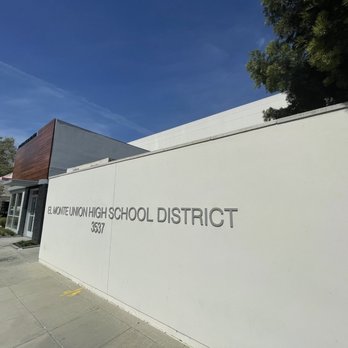
Attorney General Bonta Announces Settlement with El Monte Union High School District to Address Handling of Sexual Harassment, Assault, and Abuse Allegations

California Attorney General Rob Bonta today announced a proposed stipulated judgment with the El Monte Union High School (District) to address critical and systemic shortfalls in the District’s response to allegations and complaints of sexual harassment, assault, and abuse of students. Following a comprehensive investigation, the California Department of Justice (DOJ) found that the District systemically violated laws and regulations in place to protect against and address these types of allegations and complaints, including the California Education Code and the Child Abuse and Neglect Reporting Act. The stipulated judgment permanently enjoins the District from violating these and other anti-sexual assault...

Jill Anderson

What Mississippi Got Right About Reading

Mississippi’s reading gains have been called a “miracle,” but literacy expert Kymyona Burk says the real story is about sustained effort and all the pieces of reform coming together. “We've called it the Mississippi Marathon because the work continues,” Burk says. “Until we have all of our students 95% or more — the research actually says 95% or more of our students can learn to read and to read well. And so, until we hit that number … success is never final. Reform is never complete.” Burk helped lead Mississippi’s early literacy reforms starting in 2013, when the state ranked...

Denise Amos

Too many California kids can’t read. Will phonics help?

At a minimum, schools should teach children to read. But for years California’s elementary schools have been failing many of them. The results are so obvious even those who struggle to read can see them: Nearly 6 in 10 third graders scored below grade level on California’s reading tests during most of the last decade. That includes about three quarters of lower-income Black or Latino students.  Meanwhile, a decades-long conflict raged among California educators and equity advocates about how to teach reading. Simply put, they battled over phonics, the 17th-century system of sounding out letters and words. The reading technique...

Claude Goldenberg

California’s chronic literacy crisis requires solutions drawn from research

A few years ago, I met a first-grade English learner in a bilingual program who was learning to read in Spanish. The student, who I’ll call Elena, and her mother were from Guatemala. Elena’s mother only had a second-grade education, but she knew that one facet of Elena’s education was the gateway to all future opportunities: learning to read.  Elena had started school late, and her mother was taking no chances. She worked with Elena to teach her some basics — how letters formed syllables and syllables formed words. Elena was able to read by the end of first grade, but the...